If you have ever wandered the narrow streets of San Sebastián (Donostia in Basque) or Bilbao and found yourself drawn into lively bars overflowing with colorful small bites on bread, some of them skewered on toothpicks, you have encountered one of Spain’s greatest gastronomic gifts to the world: the pintxo. Pronounced “PEEN-cho”.

These vibrant, one- or two-bite wonders are more than just snacks. They are the heartbeat of Basque social life, a testament to the region’s deep respect for quality ingredients, creativity, and enjoyment. I was lucky enough to have a proper “pintxo guide” while I was visiting Basque country. A local friend of mine introduced me to the world of pintxo, guiding me through the labyrinth of bars and what I must try. I also have to thank her for introducing me to the one of the most delicious pintxo in San Sebastian: bacalao with pistachio cream. Mind-blowing!
It suffices to say that my main food intake in Bilbao and San Sebastian were different kinds of pintxos. That is it. I know nothing about other foods in Basque country😊
Unlike their cousins, the tapas found elsewhere in Spain (often served free with a drink), pintxos are paid for individually and are typically presented on small slices of bread, held together with a “pintxo” (toothpick or skewer). This practical design makes them perfect for standing at crowded bars, chatting with friends, and hopping from one establishment to the next. In the Basque Country, pintxo culture embodies a philosophy of life: savor the moment, celebrate fresh produce from the sea and mountains, and do it all with good company and a glass or two of few of txakoli (a crisp, slightly sparkling local white wine) or a zurito (a small beer).
The true magic happens during a “txikiteo”. This is a bar crawl where you enjoy one or two pintxos and a drink at each stop before moving on. Preferrably standing by the bar or tall tables outside the bar. Napkins often end up on the floor as a sign of a thriving spot. Pintxo tours are quite popular activity that tourists embark on because who can resist the noble quest of eating your way through the Basque Country one delicious bite at a time? In San Sebastián, these guided walks lead you through the lively streets of the Old Town, where you bar-hop like a pro, sampling fancy creations like gildas, foie gras with apple, or spider crab tarts, all while pretending you are not just there for the food (and the wine). In Bilbao, the vibe is more laid-back and gloriously chaotic, with stops at gems like Bar El Globo for their legendary txangurro gratinado, or wandering the Casco Viejo for hearty bites washed down with txakoli or kalimotxo.
The story of the pintxo begins in the early 20th century in the Basque Country, with roots tracing back to the 1930s in San Sebastián. One popular tale points to La Espiga bar near La Concha beach, where small snacks started appearing to accompany drinks. These early versions were rather simple; perhaps just a bite to tide patrons over or to enhance the flavor of wine or beer. By the 1940s, the tradition had solidified as bars began displaying an array of creative morsels on the counter, allowing customers to point and choose.
The toothpick became the defining feature, not only holding ingredients together but also serving as a convenient way to tally the bill at the end of the visit. Pintxos evolved alongside Basque identity, with the region’s seafaring history and abundant produce from the Cantabrian Sea and fertile inland valleys providing endless inspiration; salted cod (bacalao), a staple preserved for long voyages, became a cornerstone ingredient. This practical format quickly spread throughout the region, reflecting the Basque people’s strong sense of community and pride in local ingredients, and today both San Sebastián and Bilbao showcase this rich heritage. Although each city adds its own distinctive spin, from refined presentations in San Sebastián to heartier, grill-focused offerings in Bilbao. The enduring appeal lies in how pintxos transformed humble bar snacks into a vibrant cultural ritual.
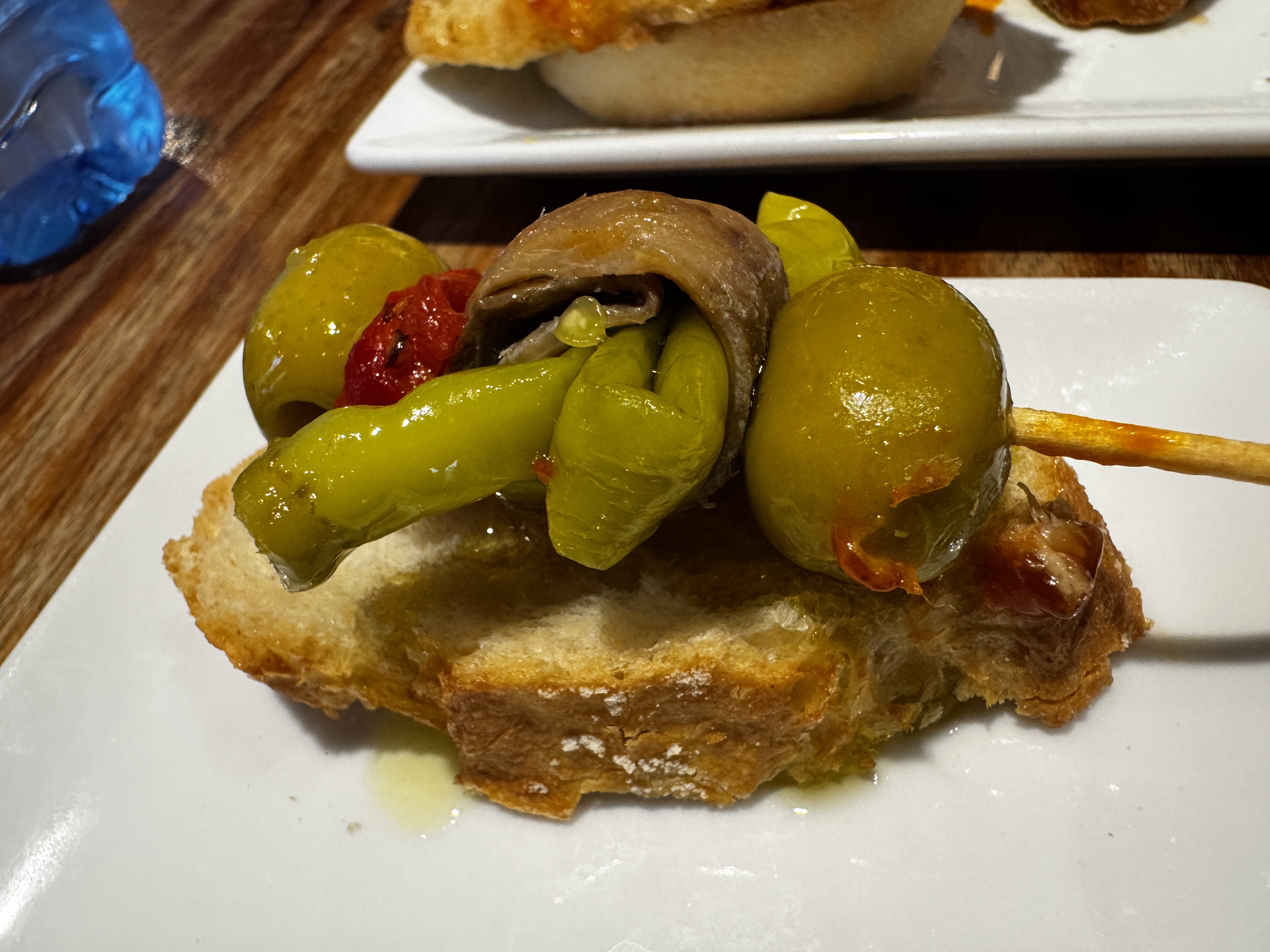
No discussion of pintxos is complete without the “Gilda”, widely regarded as the original and most emblematic pintxo. Created in the 1940s at Bar Casa Vallés in San Sebastián, it was named after the 1946 film noir starring Rita Hayworth with the same title. A regular patron skewered together a guindilla pepper (a mild, pickled green chili), a plump Manzanilla olive, and a salty Cantabrian anchovy fillet. The combination, spicy, salty, and briny, is said to perfectly complement a glass of wine. The Gilda is deceptively simple yet brilliantly balanced: the heat from the pepper cuts through the richness of the anchovy, while the olive adds a juicy, earthy note. It is still served today in countless bars across the Basque Country and remains a must-try in both San Sebastián and Bilbao. The combination may not be the most appealing to some, but I do agree that pintxo Gilda was delicious, especially while saying good-bye to Basque country at the Bilbao Airport at 10 o’clock in the morning.
While San Sebastián often steals the spotlight as the glamorous pintxo capital, Bilbao offers a compelling and distinctive alternative that locals and in-the-know travelers quietly adore. Both cities offer amazing experiences and quite a party for your tastebuds, but their styles, atmospheres, and strengths differ in wonderfully enjoyable ways, making it worth exploring both for the full Basque pintxo picture.
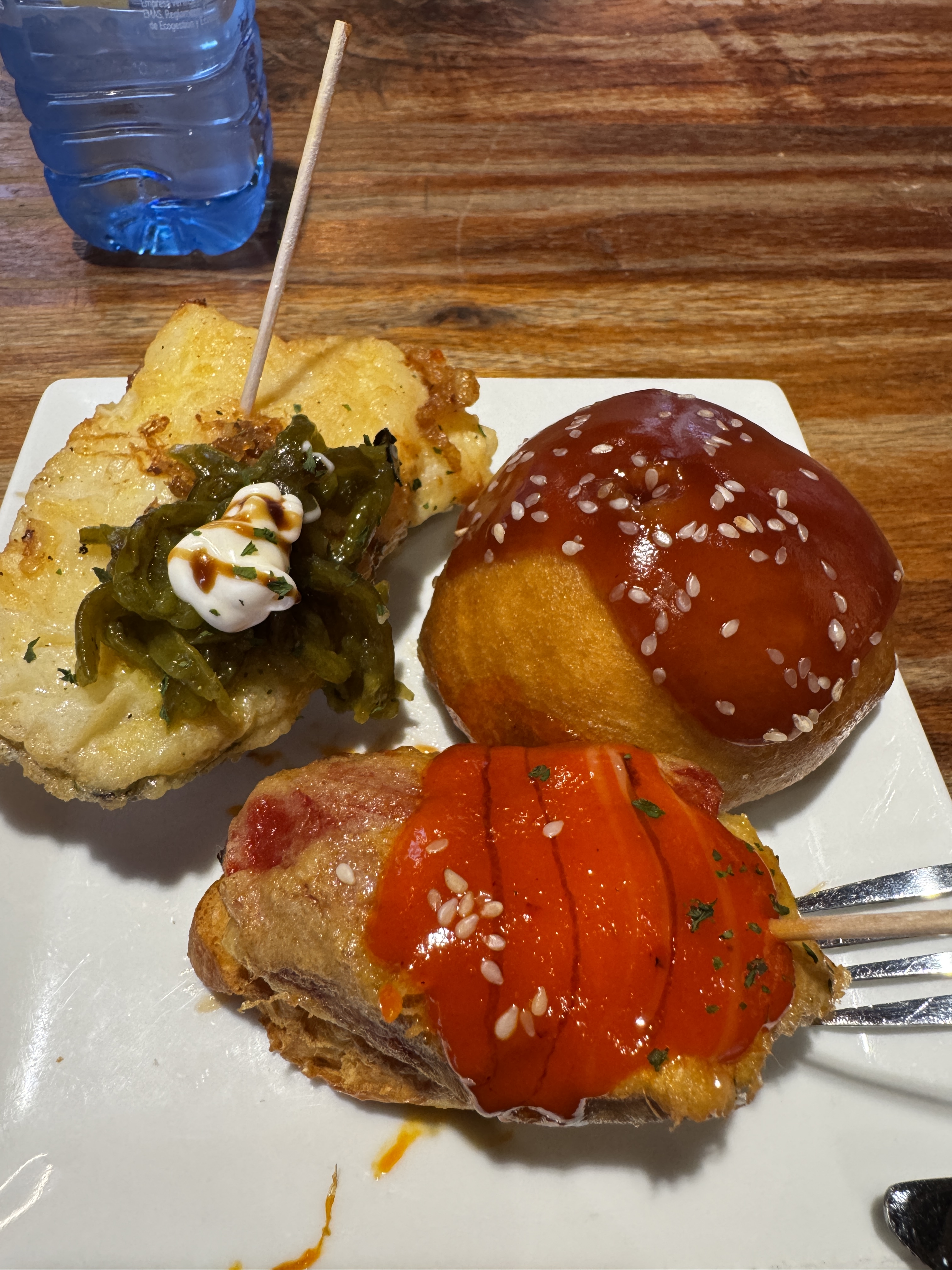
San Sebastián boasts an unmatched density of bars in its Parte Vieja (Old Town), many with elaborate, picture-perfect cold displays artfully arranged on the counter like edible works of art. Pintxos here lean toward refined creativity and high-end ingredients. They are influenced by the city’s renowned fine-dining scene. Imagine delicate stacks of foie gras, fresh seafood, and seasonal surprises that look almost too beautiful to eat. The vibe is more polished and tourist-oriented, with slightly higher prices and denser crowds, but the energy is electric as you weave between bars with a glass in hand. It is ideal for a scenic crawl with ocean views nearby, where every bite feels like a miniature celebration of Basque gastronomy at its most elegant.
Bilbao, by contrast, offers a grittier, more local, and often more affordable scene in the Casco Viejo that feels refreshingly authentic. Bars emphasize hot, made-to-order pintxos sizzling on the “plancha,” with a lively working-kitchen energy rather than static displays. Nothing beats watching your txangurro gratinado come together right before your eyes. The atmosphere is more every day and relaxed for locals, with hearty options and strong renditions of classics like the ones at El Globo. Bilbao’s pintxos serve as a delicious supporting act to landmarks like the Guggenheim, perfect for a quick stop during walking tours or as a satisfying snack before heading to the theatre. In the end, they capture that genuine, elbows-on-the-bar spirit that makes the city’s food scene so alluring.
One of the highly recommended places by my local pintxo guru was Bar El Globo in Bilbao. It turned out it is renowned for its exceptional pintxos, which stand out as small culinary masterpieces that blend traditional Basque flavors with creative presentation. The place is rather small, very crowded and you eat standing.
Signature highlights of El Globo include the iconic txangurro gratinado. It is a rich crab gratin featuring fresh seafood in a creamy, intensely flavorful topping that many hail as the jewel of Bilbao’s pintxo scene. It is displayed alongside inventive options like black pudding paired with cheddar cheese and peanuts for a bold, nutty contrast; creamy potato and truffle gratin offering an earthy aroma in every bite; and txipirón gratin, a refined take on squid in its ink that pays homage to classic Basque cuisine. I paired my four pintxos with kalimotxo, that is a mix of local red wine and cola. I am not sure I will have it again, but I can say I tried it 🙂
Beyond the atmospheric differences between the two cities, the true joy of Basque pintxo culture lies in the wonderful variety of flavors and styles available. Seafood pintxos shine especially brightly thanks to the region’s pristine coastline. Standouts include tender bacalao al pil-pil, gently cooked in a silky garlic-olive oil emulsion that clings beautifully to the flaky cod; sweet spider crab (txangurro) mixed with onions, tomatoes, and a touch of brandy, often served in its own shell or on crisp bread; sizzling grilled prawns (gambas a la plancha) with garlic and parsley; and baby squid (txipirones), either stewed in their own ink for a dramatic, tender bite or lightly fried as rabas. These oceanic treasures highlight the freshness and generosity of the sea that defines so much of the cuisine.

Meat and charcuterie pintxos bring richer, more indulgent flavors to the counter. Thin, melt-in-your-mouth slices of jamón ibérico piled on crusty bread represent simple perfection, while seared foie gras paired with stewed apple or a sweet reduction delivers luxurious creaminess. Earthy blood sausage (morcilla) and juicy beef tenderloin (solomillo). They are sometimes topped with a bold sauce and they offer satisfying, hearty bites that pair wonderfully with a glass of local wine.
Vegetable and egg-based options add freshness and balance, with the ever-popular tortilla de patatas served in generous slices (often with onions, ham, or peppers). Roasted piquillo peppers stuffed with anchovies, bright marinated white anchovies (boquerones) on tomato-rubbed bread, and creative modern twists. It is like a delicate fish pintxo finished with pistachio cream and crunchy nuts. A show how even the simpler ingredients can become memorable.
Fried and creative pintxos add excitement with contrasting textures and bold innovation: from classic cod fritters (buñuelos de bacalao) and various croquettes to avant-garde constructions that might stack unexpected ingredients like smoked eel with pickled vegetables, foie gras with cocoa powder, or molecular gastronomy touches that turn a simple bite into a surprising flavor explosion.
Vegetable and Egg-Based pintxos emphasize freshness and balance. The ever popular “tortilla de patatas” (Spanish potato omelette) is served in generous slices, with options including onions, ham, or peppers for added character. Roasted piquillo peppers stuffed or draped with anchovies bring smoky sweetness, and marinated white anchovies (boquerones) on tomato-rubbed bread (pan con tomate) offer bright, vinegary contrast. Creative modern examples include a delicate fish pintxo topped with pistachio cream and crunchy pistachio nuts, where the nutty sweetness and green vibrancy beautifully complement the savory seafood.
These playful creations keep the pintxo tradition feeling alive and evolving, giving both San Sebastián and Bilbao their own signature twists that keep tourists and locals coming back for more. In a world of fast food, the pintxo reminds me of the joy in small, shared pleasures. if you decide to go on pintxo adventure, my recommendation is to start with a Gilda, explore both cities’ unique scenes, end with San Sebastian cheesecake (burnt Basque cheesecake), and toast to Basque ingenuity. On egin!

