Oxford does not do subtle hauntings. Welcome to Haunted Oxford, where the past does not just linger… it complaints, knocks books off shelves, plays with electricity and sighs disapprovingly at your reading choices.
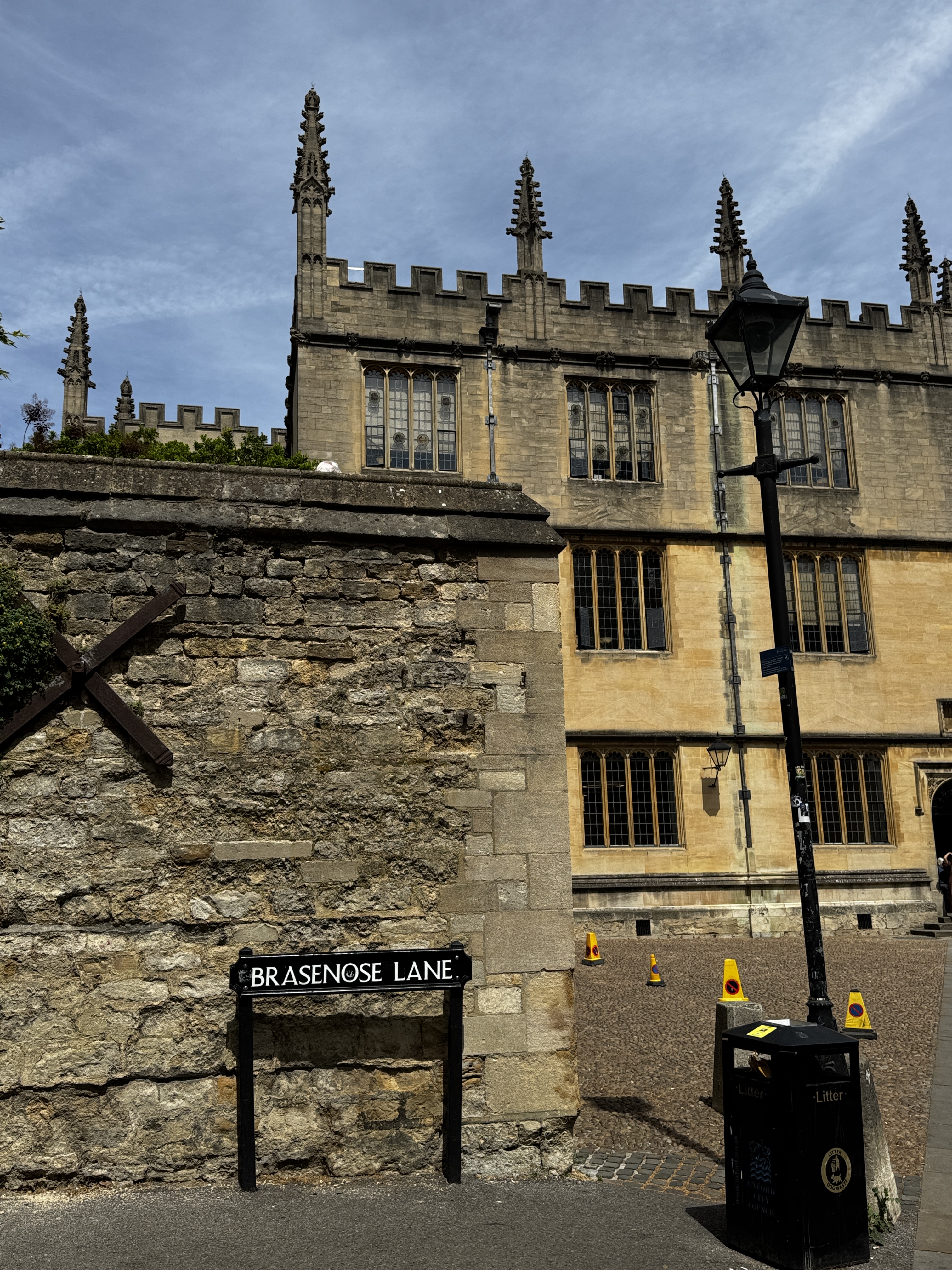
If you think this city is all dreaming spires, tweed jackets, and overpriced punting, you have never stayed after dark or you never bought a ticket for a ghost-tour in Oxford. This ancient university town is not just old after sunset; it is clearly restless. Nearly a thousand years of plagues, executions, town-gown riots, beheadings, and the occasional overworked student who simply refused to leave mean Oxford has ghosts the way other cities have traffic problems.
Oxford’s haunted reputation stretches back centuries. Teaching began here around 1096, and by the time Henry II banned English students from Paris in 1167, the city was already a pressure cooker of ambitious scholars, rowdy monks, and locals tired of chamber pots being emptied from windows. Centuries of kings, civil wars, religious purges, and academic drama later, the place is soaked in stories that refuse to die.
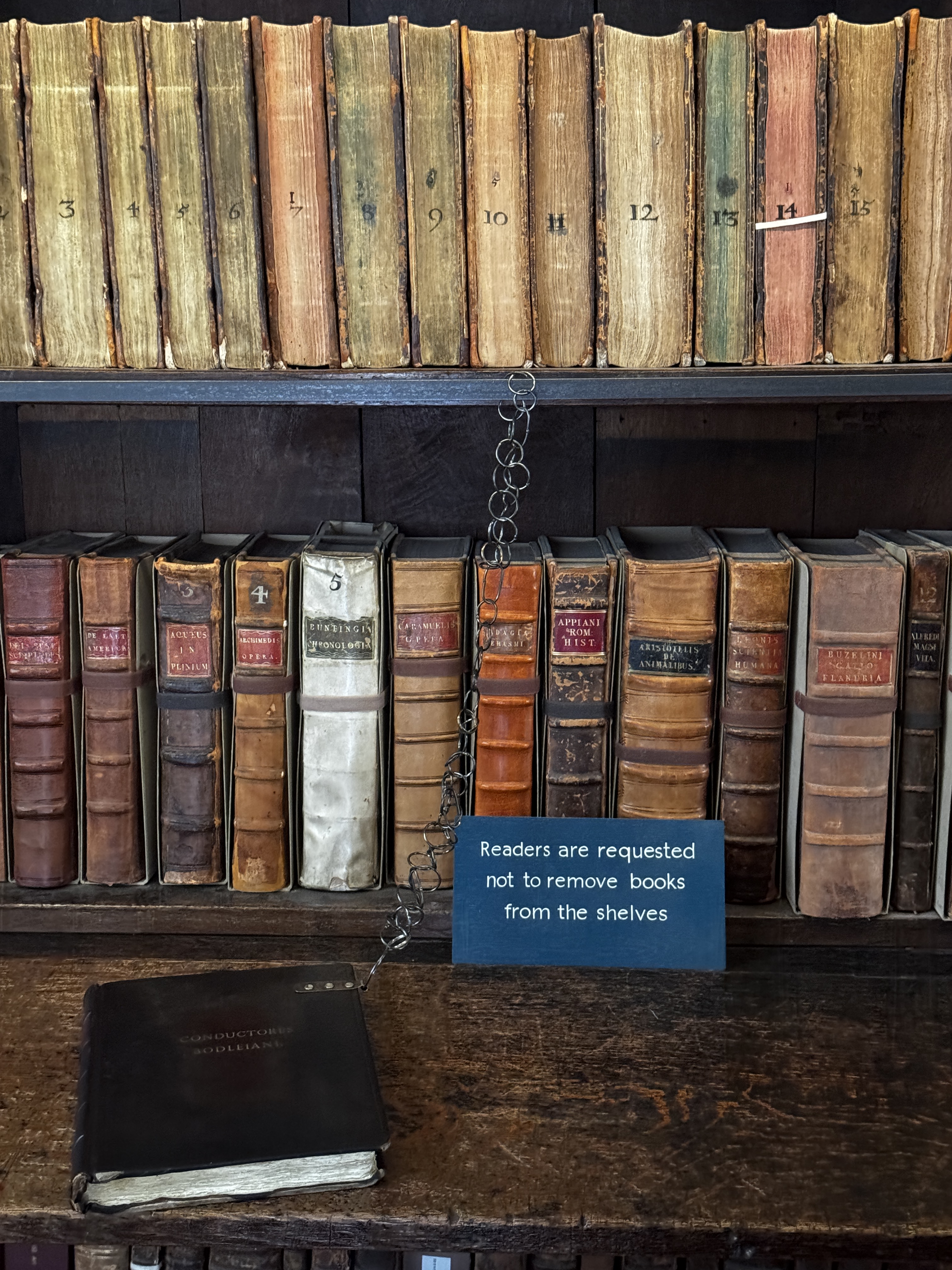
No haunted Oxford tour is complete without starting at the star of the show: Duke Humphrey’s Library, the oldest reading room in the Bodleian complex. In 1444, Humphrey, Duke of Gloucester (brother to Henry V), donated a huge collection of manuscripts. To stop them walking, the books were literally chained to the shelves (there is still one of two chains in the library as a proof). It was forbidden to remove them. Period. There is no “I will bring it back next week,” and definitely no sneaking a 15th-century tome under your Oxford hoodie. In 1645, even King Charles I was refused permission to borrow one. The no-loans policy was ironclad. Scholars hunched over desks by candlelight, developing bad backs and existential dread. The rule still stands: the books do not leave the building.
But here’s the spooky upgrade: the library is said to be haunted by a ghostly librarian, often identified as Thomas Allen (1542–1632), a mathematician, astrologer, and antiquary. Allen was a renowned collector of ancient manuscripts and a respected tutor, but he was so skilled in astrology and the sciences that contemporaries whispered he was also a magician. Apparently, Allen haunts Duke Humphrey’s because he was a brilliant, slightly mysterious scholar whose life and collection were intimately connected to the library’s world of rare books, astrology, and forbidden knowledge. The stories grew naturally from his real-life reputation as a man who knew “too much.” Visitors and staff still report cold spots, flickering lights. It is properly atmospheric.
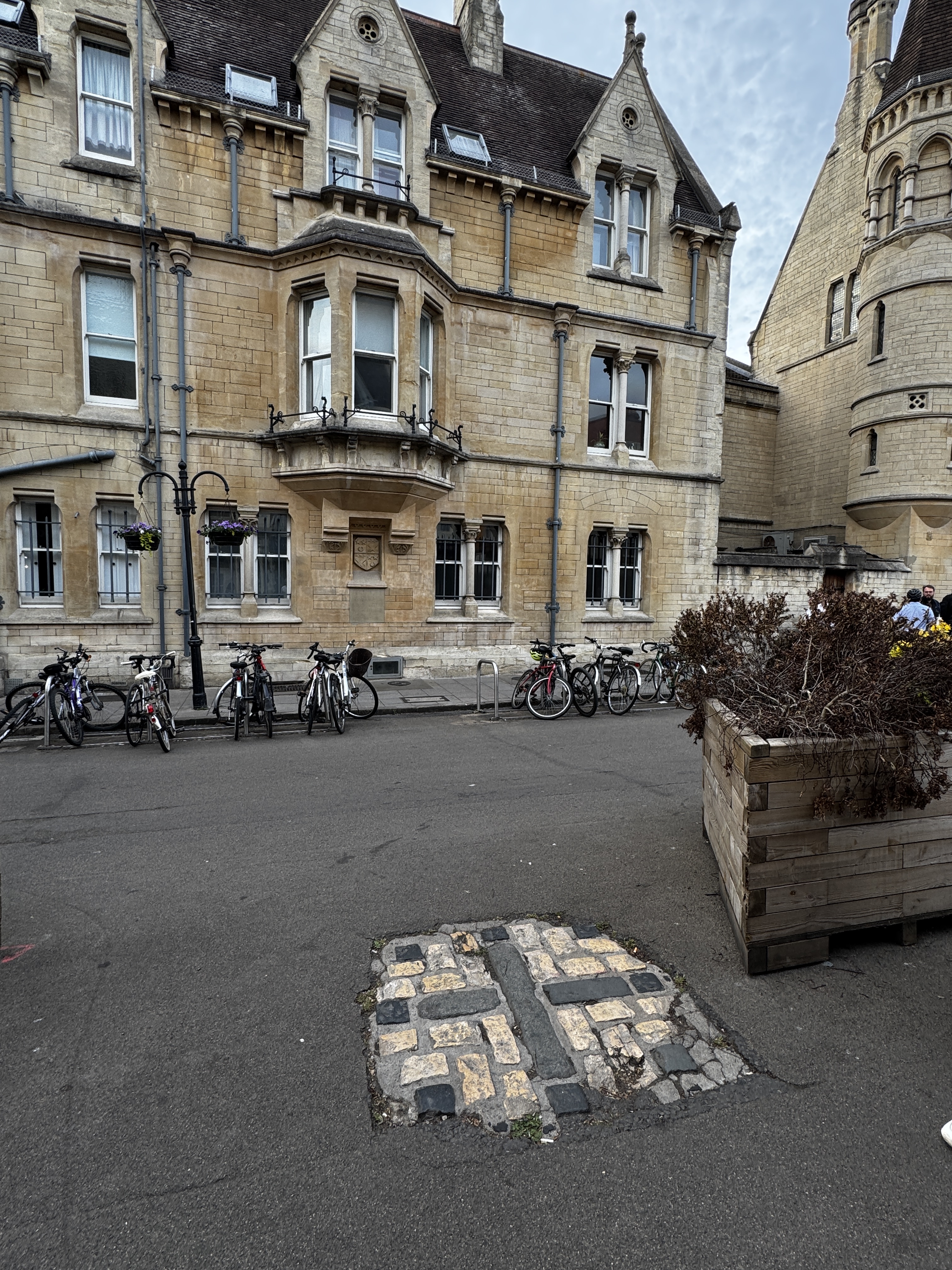
One of the darkest chapters in Oxford’s haunted history unfolded right in the middle of Broad Street. During the religious turmoil of the 16th century, three prominent Protestant reformers, Hugh Latimer, Nicholas Ridley, and Thomas Cranmer (Henry VIII’s own priest, archbishop, and close counsellor), were burned at the stake for heresy under Queen Mary I. Cranmer had helped shape the English Reformation under Henry, but that didn’t save him when the religious winds shifted. Latimer and Ridley were tried for heresy in the University Church of St Mary the Virgin and executed together on 16 October 1555. As the flames rose, Latimer famously comforted his companion with the words that would echo through history: “Be of good comfort, Master Ridley, and play the man; we shall this day light such a candle, by God’s grace, in England, as I trust shall never be put out.” Thomas Cranmer, who had been given longer to appeal, was forced to watch the horrifying scene from a prison cell in the nearby Bocardo tower. A year later, on 21 March 1556, Cranmer himself was led to the same spot in Broad Street and burned at the stake.
Today, a simple cross made of cobblestones marks the exact spot in Broad Street where the fires blazed. It is easy to miss if you are not looking for it. It is just a quiet memorial set into the crowded road. According to local lore, nothing can ever be placed directly on that cursed ground where Cranmer was burnt; no flowerpot, no stall during the Christmas Market, and not even asphalt has been laid over the sacred spot itself. Locals say nothing can ever be built directly on that cursed ground, and legend has it that walking over the cross brings bad luck. Students and tourists alike often hop awkwardly around it or step over it with exaggerated care, half-joking, half-serious. Because who wants to tempt fate in a city where the ghosts already have strong opinions?
Take William Laud, Archbishop of Canterbury, beheaded on Tower Hill in 1645 during the English Civil War for his Royalist sympathies and controversial religious policies. A former President of St John’s College, Laud had been a major benefactor to the institution, donating books, manuscripts, and funds for the library that now bears his name in part. His ghost is said to haunt the St John’s College library — sometimes carrying his own severed head under his arm, other times bowling it across the floor like a macabre game of bowls or cricket. Late-night studiers have reported hearing unexplained footsteps that enter rooms but never seem to leave, along with cold spots and the uneasy feeling of being watched. Laud clearly still has strong opinions about theology and college governance that death could not silence.
Over at Magdalen College, things get even wilder. The college, with its beautiful cloisters and deer park, claims multiple ghosts, including that of George Napier (also known as Blessed George Napier), a Jesuit priest executed in 1610 (not 1568) for his faith during the reign of James I. He was hanged, drawn, and quartered at Oxford Castle; his body parts were then displayed as a warning around the city, and his spirit is said to still wander the college and nearby streets, searching for his missing head. Oscar Wilde, who studied at Magdalen from 1874 to 1878 and enjoyed a flamboyant undergraduate life there, is also rumored to stroll the grounds and quads, perhaps delivering devastating one-liners to anyone improperly dressed. Monks from the medieval period, some headless, along with various scholars and the occasional poltergeist activity, are said to keep the college lively after hours.
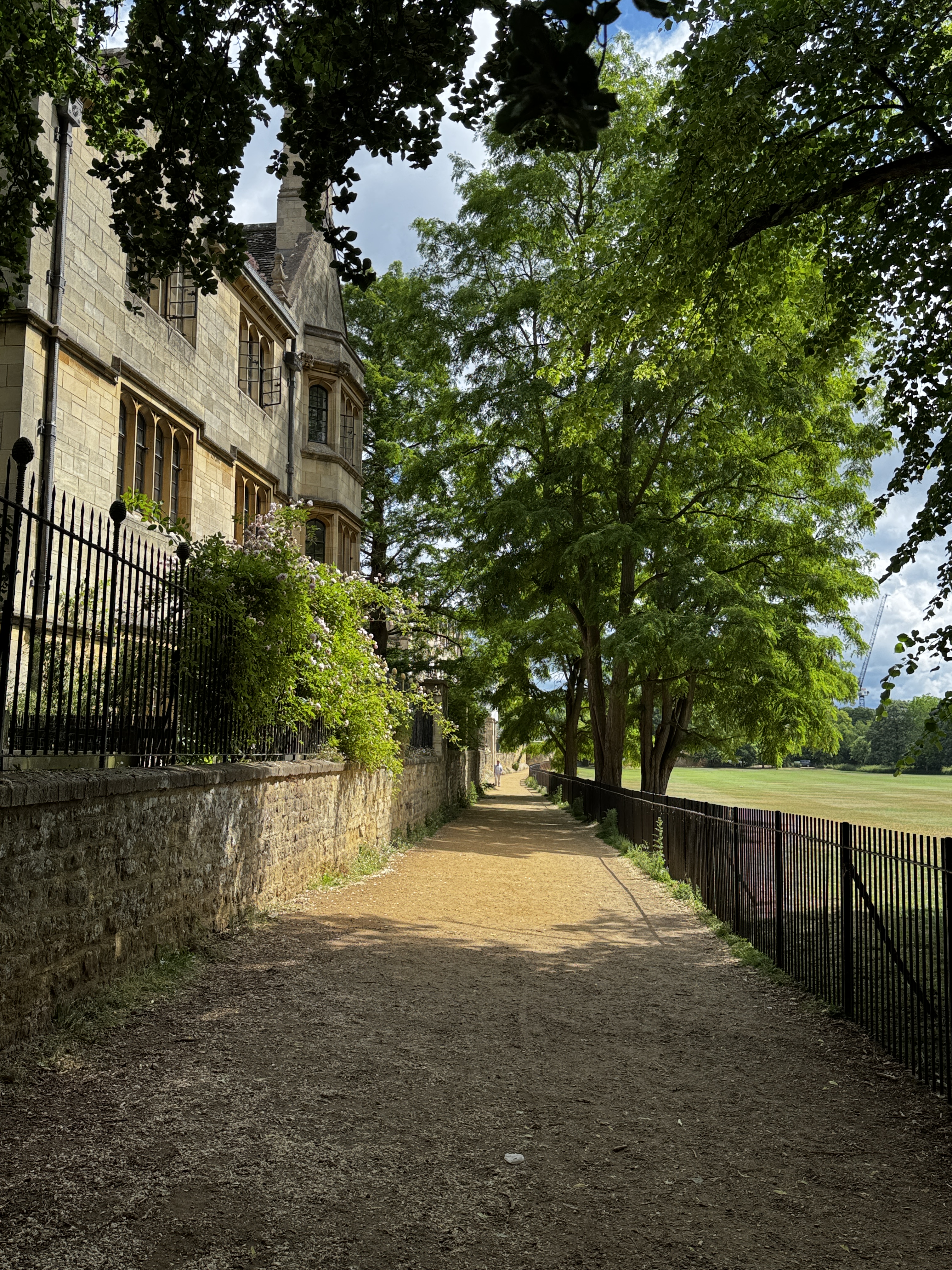
Christ Church has hosted its own spectral residents, including a mysterious scholar in old-fashioned academic robes who wanders the corridors and staircases of the historic college, once home to figures like Lewis Carroll and John Locke. Nearby, Merton College has the ghost of Colonel Francis Windebank, a Royalist officer executed by firing squad in 1645 during the Civil War. His apparition is reported along Dead Man’s Walk (the path beside the college) and sometimes within the college grounds, where he is said to reenact his final moments with phantom gunfire or the sound of marching feet. These hauntings tie into Oxford’s turbulent Civil War history, when the city served as King Charles I’s headquarters.
Oxford suffered repeated outbreaks of plague, including major episodes during the Black Death of 1348–49 and later 17th-century epidemics. With churchyards overwhelmed, civic authorities dug large ditches and pits for mass burials, particularly on the borders and waste ground just outside the medieval city walls. One such area lay near the northern boundary, close to the site of modern Broad Street and the former North Gate. Bodies were often placed in these ditches with minimal ceremony to limit the spread of infection, as recorded in contemporary accounts of plague management across English towns. Historical records and occasional archaeological finds in peripheral Oxford locations confirm the use of such emergency burial sites during periods of high mortality. These ditches formed part of the city’s desperate response when normal burial practices could no longer cope with the scale of deaths.
New College was supposedly built on ground that included a plague pit from the Black Death of the 14th century. Founded in 1379 by William of Wykeham, the college incorporated part of the old city ditch and walls, an area that had become derelict and used for emergency burials after the devastating plague swept through Oxford. This stretch of the medieval city wall still stands within the college grounds today, making New College one of the most architecturally striking examples of how the university expanded over earlier layers of Oxford’s troubled past. The combination of ancient walls, cloisters, and the possible presence of plague victims below adds an extra layer of atmosphere to one of Oxford’s most prestigious colleges
You will ask what about the witch-hunting? Oxford has a long, if quieter, connection to witchcraft and the occult that stretches back centuries. In the 16th and 17th centuries, several accused witches faced trials in the city, often linked to accusations of maleficium, using magic to harm neighbours, cause illness, or interfere with livestock. One notable case involved local “cunning folk” and healers who walked a dangerous line between helpful magic and accusations of sorcery during the turbulent years of religious upheaval. The city’s intellectual reputation also attracted interest in astrology, alchemy, and natural magic; figures like the mathematician and astrologer Thomas Allen (whose ghost is said to haunt Duke Humfrey’s Library) were rumoured in their own time to dabble in forbidden arts. During the Civil War era and the witch-hunting panics influenced by Matthew Hopkins and others, Oxford saw occasional accusations, though it never became a major execution site like some other English towns. Local legends sometimes tie unexplained phenomena in old college buildings and pubs to restless spirits of those once suspected of witchcraft.
One documented witchcraft practice tied directly to Oxford involved the “swimming” or “ducking” test; a brutal folk method used in the 17th century to determine guilt. Suspected witches were taken to the moat or waterways around Oxford Castle, which was used then as a prison. Their left thumb was tied to their right toe, and they were thrown into the water. If they floated, it was taken as proof that the water (pure and holy) had rejected them, confirming they were a witch. If they sank, they were deemed innocent. Though many drowned before they could be pulled out.
Oxford saw such accusations and informal trials during the height of witch-hunting fervour in the 1640s-1660s, influenced by the broader English panic under figures like Matthew Hopkins. While Oxford did not have as many high-profile mass trials as Pendle or Essex, local records and contemporary accounts note suspected witches being held and tested in the city, especially during times of social unrest and plague. The castle’s grim reputation made it a natural site for these ordeals.
The castle itself has accumulated its own restless residents over the centuries. One of the oldest and most dignified ghosts is said to be Empress Matilda, the 12th-century claimant to the throne. During the Anarchy, she famously escaped Oxford Castle in 1142 by crossing the frozen Thames disguised in a white cloak. Her apparition, often described as a calm woman in a flowing white robe, has been seen sitting on the stairs or moving quietly through the corridors, seemingly unbothered by the living. She remains one of the site’s more peaceful presences.
Another long-standing presence haunts the ancient crypt beneath the castle. This 900-year-old space is reportedly home to the ghost of a monk known for his surprisingly colourful language – outbursts that were far removed from usual pious tones. Visitors claimed to have heard disembodied voices uttering profane exclamations. The contrast between the sacred setting and the monk’s earthy vocabulary can make it one of the more memorable ghost-stories. Another resident of Oxford Castle is Mary Blandy, who was executed by hanging at the castle in 1752 for poisoning her father in one of the Georgian era’s most notorious murder cases. It is also said that she walks near the former gallows site. Her spirit serves as a lingering reminder of the castle’s long history as a place of imprisonment and punishment.
So, if you find yourself wondering about different colleges in Oxford, just remember that each one seems to come with its own cast of spectral residents, from restless scholars and headless monks to kings and executed priests who never quite checked out. Ghost tours do excellent business here, and for good reason. The city wears its supernatural reputation like a slightly tattered academic gown, always with pride and just a hint of a wink.

