In the misty chronicles of higher education, few places can claim the sheer gravitational pull of the University of Oxford. Teaching here dates back to at least 1096, making it the oldest university in the English-speaking world. It exploded in popularity after 1167 when Henry II, in a classic medieval hissy fit with the French, banned English students from the University of Paris. Oxford became the intellectual escape hatch. No single founder, no dramatic “eureka” moment. It was just a slow-burn collection of scholars, monks, and ambitious types arguing in churches and hired halls.
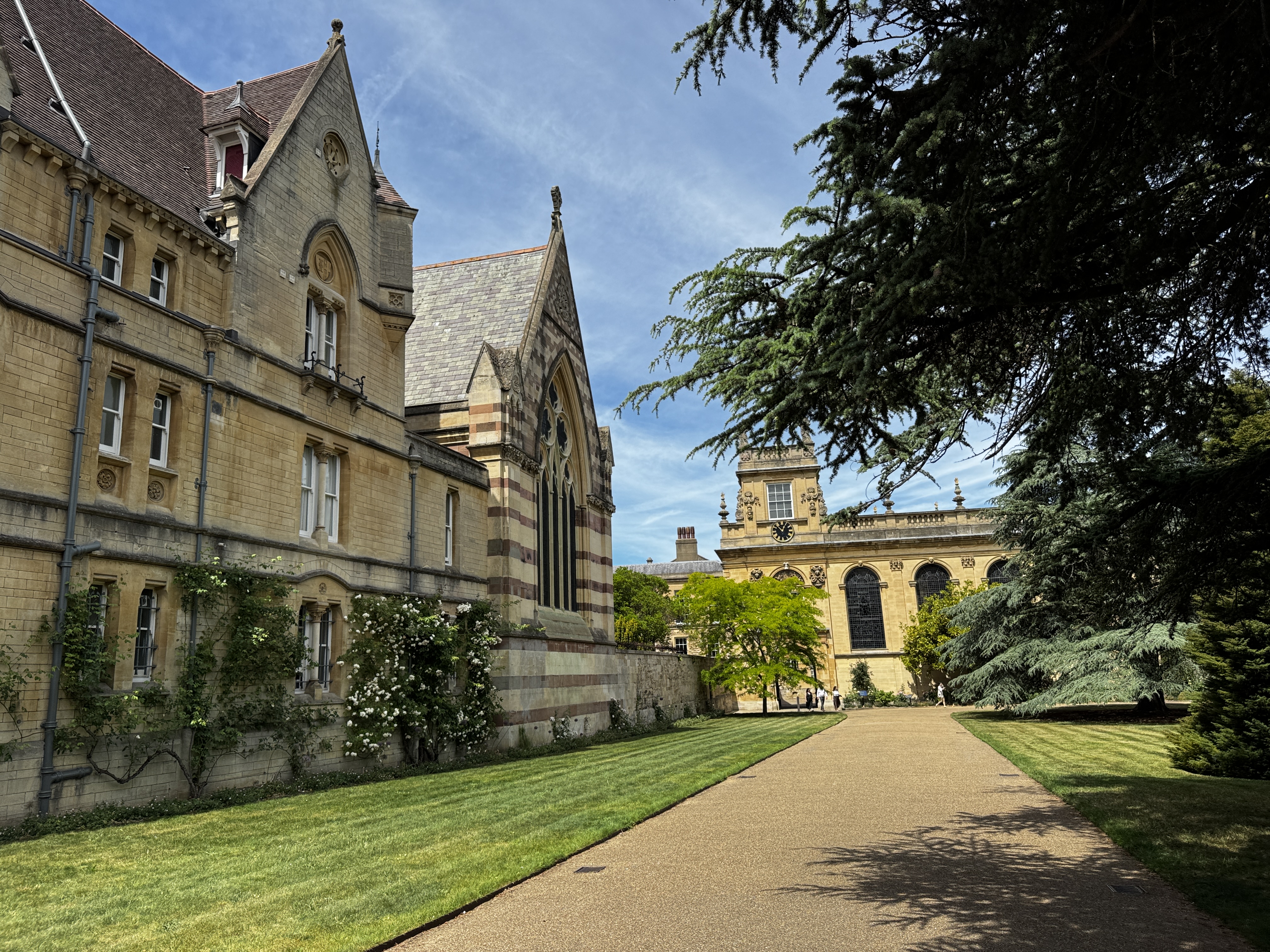
By the 13th century, colleges like Balliol and Merton started popping up like overpriced student housing. Centuries of kings, plagues, wars, and the occasional town-gown riot later, Oxford stands as a Gothic dream of spires, secrets, and people who quote Latin for fun. It is less a university and more a time machine that occasionally spits out prime ministers and Nobel laureates.
If Oxford were a person, it would be that annoyingly well-read friend who has been everywhere, met everyone, and still remembers your embarrassing freshman poem. And nowhere is that literary DNA more concentrated than in its colleges and libraries. I had the pleasure of visiting my brilliant friend who was staying in Oxford for a while and, both being hopeless book-nerds, we delved deep into its history and literally literary world.
Oxford has a habit of collecting brilliant minds and then testing their sanity. Take Percy Bysshe Shelley, the Romantic rebel who attended University College. Shelley was expelled in 1811 for refusing to deny authorship of a pamphlet called “The Necessity of Atheism”. Imagine getting kicked out for being too honest about not believing in the sky daddy. His fiery spirit lives on in lines like these from “Ozymandias”:
 “Look on my Works, ye Mighty, and despair!
   Nothing beside remains. Round the decay
   Of that colossal Wreck, boundless and bare
   The lone and level sands stretch far away.”
Nothing says “Oxford dropout energy” like mocking a fallen tyrant while your own academic career lies in ruins.
Then there is Lewis Carroll (real name Charles Dodgson), who studied and taught at Christ Church. The man gave us “Alice’s Adventures in Wonderland”, a trippy masterpiece born from rowing trips and mathematical mischief. Who else could turn a bored girl into a rabbit-hole adventurer fighting the Queen of Hearts? Oxford’s dreaming spires clearly inspired the rather quirky world of Alice’s adventures.
Another famous name, Oscar Wilde sauntered into Magdalen College with aesthetic flair and left with enough wit to fill libraries. The man who quipped, “I can resist everything except temptation,” turned Oxford into a stage for his larger-than-life persona. His “The Picture of Dorian Gray” drips with the decadence he soaked up in those golden quads.
And we cannot skip John Betjeman, who struggled at Magdalen (tutored, ironically, by C.S. Lewis) but became Poet Laureate. His affectionate, slightly snobby verses about suburban England and architectural love affairs capture the Oxford vibe perfectly; nostalgic, quirky, and deeply English.
These literary giants did not just pass through the Colleges. They absorbed the place’s peculiar atmosphere and magic and spat it back as poetry, satire, and imaginary worlds that still shape how we dream and discuss literature.
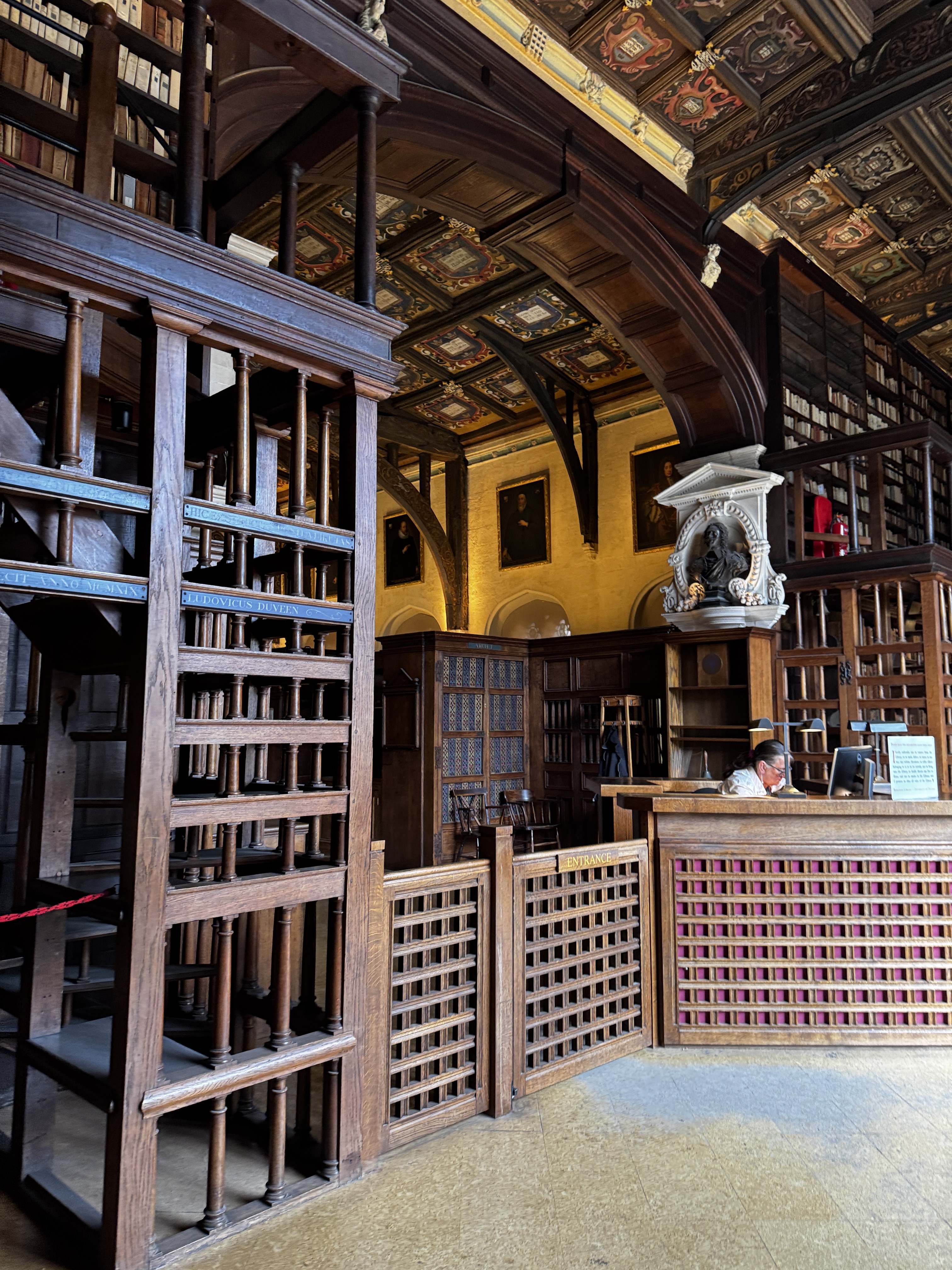
No tour of literary Oxford is complete without the impressive Duke Humphrey’s Library, the oldest reading room in the Bodleian complex. Humphrey, Duke of Gloucester (brother to Henry V), donated a massive collection of manuscripts in 1444, kickstarting one of the greatest libraries in Europe.
Here’s the deliciously medieval part you cannot experience anywhere else: books were literally chained to the shelves. You couldn’t just wander off with a precious volume like it was a library copy of Dan Brown’s “The Da Vinci Code”. The rule was simple and very strict: read it here, or do not read it at all. Scholars sat with obedience at wooden desks, squinting by candlelight, probably developing early scoliosis and a lifelong grudge against drafts. To this day, many rare books stay put; there is no takeaway service for 15th-century tomes.
And because no ancient library worth its salt can exist without supernatural drama, Duke Humphrey’s Library is said to be haunted. Legend whispers of a ghostly librarian (possibly Thomas Allen) who still patrols the aisles, ensuring no one disturbs the peace or tries to smuggle out a manuscript under their gown. Visitors report flickering lights and the distinct feeling that someone (or something) is judging your reading choices. Imagine trying to finish an essay while a spectral don sighs disappointedly over your shoulder: “Not another Reddit summary, mortal?”
It is atmospheric enough that it doubled as the Hogwarts library in the “Harry Potter” films. More on that wizarding invasion later.
Enter the one and only John Ronald Reuel Tolkien, the man who made elves, orcs, second breakfasts, and “elevensies” a cultural phenomenon. He arrived at Exeter College, Oxford, in 1911 as an undergraduate, already deeply fascinated by ancient languages and heroic legends. He threw himself into the study of Old and Middle English, Finnish, and Norse mythology, often spending long hours in the Bodleian Library while balancing the typical rowdy student life of the era. Despite leaving briefly for the First World War, Oxford remained central to Tolkien’s life, shaping the scholarly mind that would later create the intricate languages and mythology of Middle-earth.
Tolkien later returned as Rawlinson and Bosworth Professor of Anglo-Saxon at Pembroke College in 1925, eventually moving to Merton as Professor of English Language and Literature. He lived in North Oxford with his family, cycling to lectures, grading papers, and quietly inventing entire mythologies while the rest of the world dealt with wars and modernity.
“The Hobbit” (1937) emerged during his Pembroke years, born from stories he told his children and his deep love of Old English and Norse sagas. Then came the beast: the “The Lord of the Rings” trilogy, largely written in Oxford. Picture Tolkien in his study, surrounded by pipes and philological notes, forging “The Fellowship of the Ring”, “The Two Towers”, and “The Return of the King”. He drew on Oxford’s ancient stones, countryside walks, and academic friendships for inspiration. The Ents? Probably inspired by trees he loved. The languages? Pure scholarly obsession turned into art.
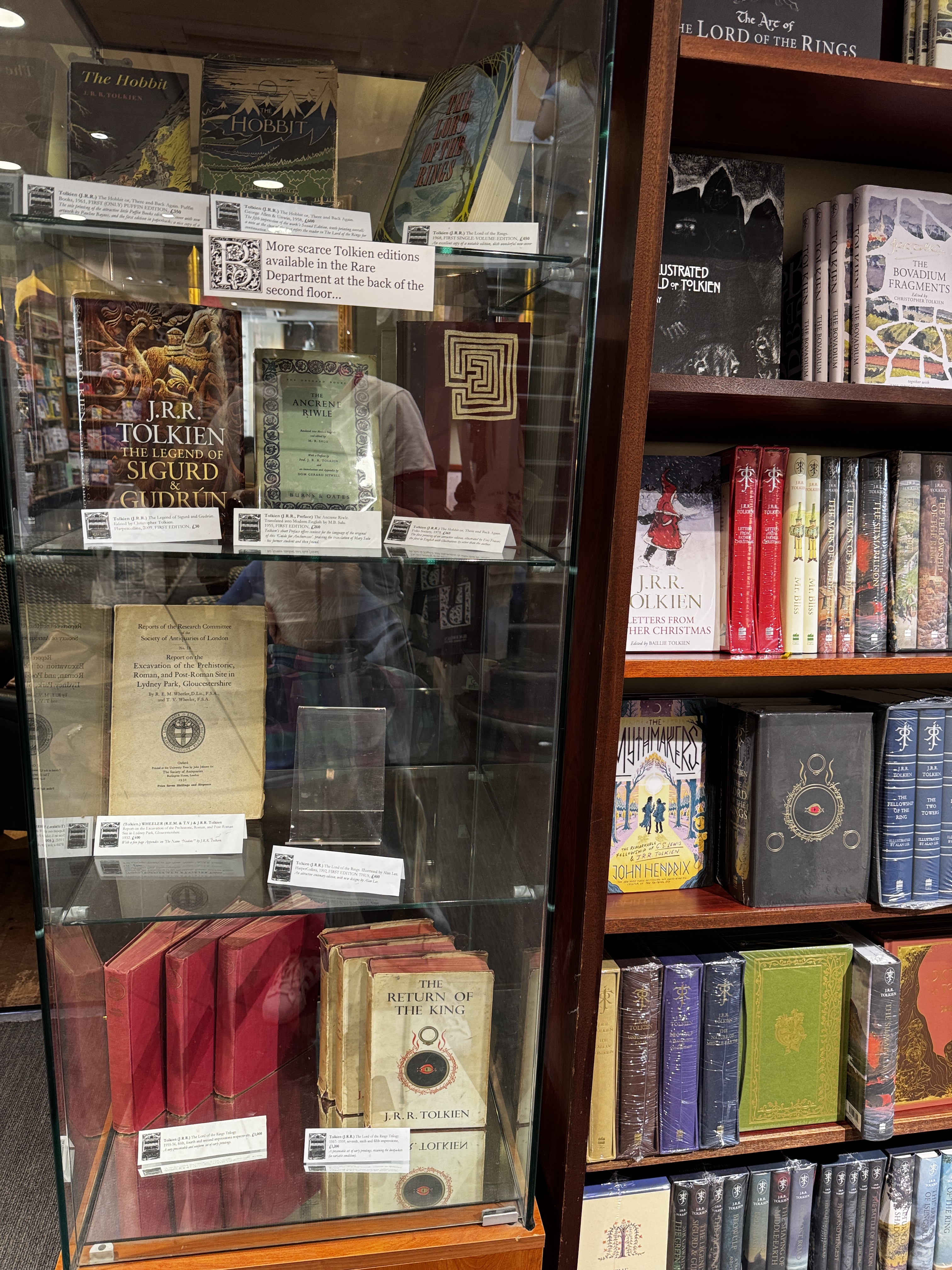
Our mandatory stop while exploring the colleges of Oxford was Blackwell’s Bookshop on Broad Street, the legendary Oxford institution that has been feeding hungry minds since 1879. I felt like I had stepped into a Tolkien fan’s holy grail. Tucked away on the 1st floor, behind gleaming glass cases, sat breathtaking rare editions of “The Lord of the Rings”. Worth mentioning that some of those early editions are priced at sums that would make your monthly rent look like pocket change.
Being a huge Tolkien fan, I simply could not help myself. I walked out with yet another edition of the Trilogy clutched happily in my hands, fully aware that my bookshelf was running out of excuses… and space.
Tolkien was not just writing fantasy. He was creating a world with the rigor of a professor. Oxford gave him the time, the colleagues, and the quiet corners to let his imagination run wild. Without those decades in the city of dreaming spires, we might never have had “One Ring to rule them all.”
Clive Staples Lewis, or “Jack” to friends, arrived at Oxford as an undergraduate and stayed for life. He became a fellow at Magdalen College, teaching English and Medieval Literature with a voice that could make even Beowulf sound riveting. Lewis’s early years were marked by atheism and intellectual swagger, but Oxford’s beauty, conversations, and a fateful friendship slowly chipped away at his defenses.
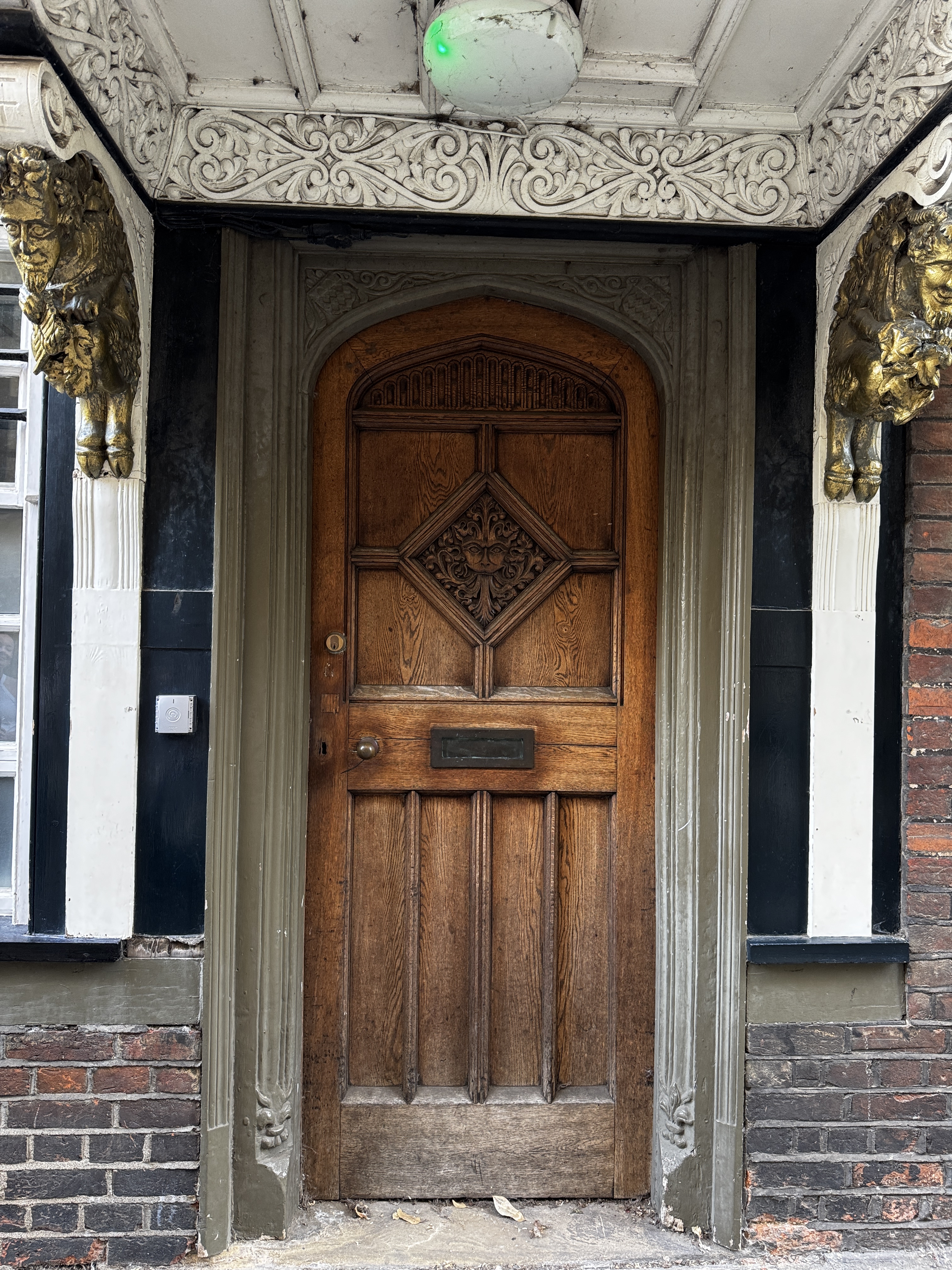
His greatest works poured out while based in Oxford: the “Chronicles of Narnia” series, starting with “The Lion, the Witch and the Wardrobe” (1950). That magical wardrobe? Possibly inspired by a real wardrobe in his home or a mysterious door in St. Mary’s Passage. “Mere Christianity”, “The Screwtape Letters”, and “The Space Trilogy” all carry the imprint of Oxford life, the debates, the moral philosophy, and the sense that another world is just one step away.
Lewis wrote with warmth, clarity, and a profound understanding of human (and divine) nature. Walking the same paths as medieval scholars, he made ancient truths feel fresh and urgent.
But Tolkien and Lewis did not just coexist in Oxford. They formed the heart of the Inklings, an informal literary group that met in the 1930s and ’40s. They gathered at the Eagle and Child pub (affectionately called “The Bird and Baby”) on Tuesdays and in Lewis’s rooms at Magdalen on Thursdays. Over pints and pipes, they read drafts aloud, tore them apart constructively, and encouraged each other’s wild ideas.
Apparently Lewis played a key role in pushing Tolkien to finish “The Lord of the Rings”. Tolkien, in turn, helped Lewis see the power of myth in faith. Their friendship was not always smooth as literary giants rarely are, but pure magic was the result.
Can you imagine the banter: Tolkien defending his elves and hobbits while Lewis defended his talking lions. Oxford at its finest. Brilliant minds arguing passionately in cozy rooms and changing the literature we know forever.
Coming back to wizardry mentioned earlier. While “Harry Potter” was not penned in Oxford, the city loaned its most historic and photogenic spots to the films. Christ Church College’s grand staircase became the entrance where new students meet Professor McGonagall. Its dining hall inspired the Great Hall feasts. The Bodleian’s Divinity School served as the Hogwarts infirmary, and Duke Humphrey’s Library stood in for the Restricted Section (complete with that haunted vibe). New College’s cloisters and quadrangles added more Gothic grandeur. Walking through these quads, you half-expect a Sorting Hat to drop on your head or a ghost to complain about the noise. Oxford did not birth Harry, but it absolutely dressed him for the Yule Ball.
For me, Oxford is not just a collection of old buildings and clever ghosts. It is a mindset. It is a place where ideas ferment for centuries, where one professor’s bedtime story becomes a global mythology, and where chained books and whispered legends keep the past alive. From Shelley’s rebellion to Tolkien’s rings, Lewis’s wardrobes to cinematic wizardry, the city turns ordinary minds into legends.
So next time you’re in Oxford, linger in a quad, browse the Bodleian (politely and quietly), and raise a pint to the Inklings. Just do not try to nick a book from Duke Humphrey’s.
The ghost librarian is watching.

