Ireland, or Éire in Irish, is an island in the North Atlantic and the third-largest island in Europe. It is separated from Great Britain by the North Channel, the Irish Sea, and St George’s Channel. This emerald gem owes its lush moniker to the frequent rains that nourish its rolling hills, ancient stone walls, and peat bogs, creating a tapestry of vibrant greens that shift with the light— from deep forest shades in the Wicklow Mountains to the softer pastels of Connemara’s coastal meadows.
I had been hearing about the beauty of the Emerald Isle for quite a few years. Every time there was a documentary on TV about the island, we had discussed plans to travel there. It took me some time to finally organize the trip to the island, but the waiting really paid off. I am talking about the experience, the sights, and the food—Ireland should be marked as a must-see destination for every traveler, with its Celtic crosses whispering ancient tales, fairy-ringed castles shrouded in mist, and the soul-stirring call of the Atlantic crashing against sheer cliffs.
We arrived in Ireland a few days after heavy storms. There were still many broken trees on the ground, the soil was still wet, and the air was fresh and moist. The island is quite famous for its winds and rains, but we were lucky to have more sunny days than rain, allowing golden light to dance across wild Atlantic waves and illuminate rainbows arching over sheep-dotted fields.
We decided not to stay in Dublin and chose instead to explore the coast. We rented a car, and starting with Wicklow—its glacial valleys and monastic ruins cloaked in ancient oaks—we drove by the coast through the South of Ireland, to Limerick and back to the capital for a final night. What I mean here by South of Ireland is the area below the Limerick-Dublin highway. It is not an official term, so do not quote me on that. Narrow lanes twisted through hedgerows heavy with fuchsia blooms, past thatched cottages and dolmen tombs from Neolithic times, revealing Ireland’s layered history at every turn.
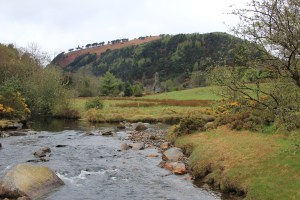
The car was small and not the fastest, but it was exactly what one needed for a road trip on the country roads. It gave me time to enjoy the density and the greenness of the forests as Ireland is truly a green island. I was mesmerized by the roads covered by the crowns of the trees and kept stopping to look at the structures created by nature. There were moments when I felt like I had never seen so many trees in my life—their canopies forming natural cathedrals, alive with the rustle of leaves and the occasional flash of a red squirrel or the trill of a willow warbler.
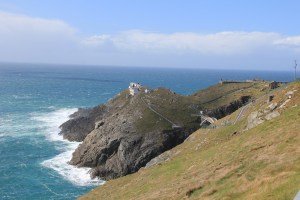
Ireland is beautiful, in simple words. I had seen many pictures or programs on TV showing parts of the island, but none could simply convey the real wonder of these places. One must experience the strongest winds almost taking you off balance and watch seals swimming below the bridge at Mizen Head, the southwesternmost point of Ireland, where dramatic cliffs plunge into frothing seas and the ocean’s roar echoes like a siren’s song.
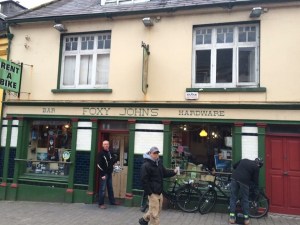
Then one has to get soaked wet, walking around in Dingle, while visiting eclectic places where one can order an Irish beer or whiskey and buy poison for rats at the same time. Places like Foxy John’s with its old exterior are still popular with the natives. They are quieter than some other pubs in town, but to outsiders, they give a glimpse into the past, when public houses mixed beer in the evening and retail sales during the day. If one wants to feel like a local, in the evenings, one can sit in one of the local bars, drinking beer and listening to a performance of a local musician strumming fiddles and bodhráns under low-beamed ceilings.
Farther north, there is Muckross House and Gardens inside the first National Park in Ireland, Killarney National Park. Plan your visit wisely, because there are many places to visit there. Muckross House is a Tudor-style mansion rich in artwork, still holding a well-preserved room where Queen Victoria stayed during her visit in 1861. The house is located by the lake where one can enjoy a short boat ride amid lily pads and calls of waterfowl, surrounded by rhododendron-lined paths and the scent of blooming heather.
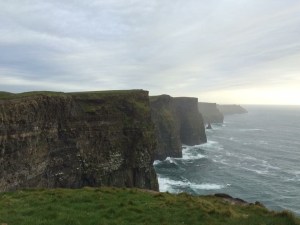
Driving north from the Ring of Kerry—its serpentine roads hugging fjord-like inlets and offering vistas of Skellig Michael’s monastic beehive huts—we stopped at the most famous location in Ireland, Aillwee an Mhothair or also known as Cliffs of Moher. They are located by the Burren region—a surreal karst landscape of limestone pavements, wildflowers, and megalithic tombs—and run for approximately 14 km. At their southern end, they rise to up to 120 m above sea level, increasing to up to 214 m at their highest by O’Brien’s Tower, where puffins nest in crevices and the horizon stretches endlessly to the Aran Islands.
As proper travelers and foodies, we had to eat, and Ireland is one of the places where one can indulge in fish. It is not any fish, but nice and fatty Atlantic fish! On the second evening, we discovered something extraordinary: the Irish seafood chowder. It is usually served with local bread and butter, often soda bread with its crusty exterior and tangy flavor from buttermilk.
Being a woman, I am always trying to convince myself to stay away from the simple carbs, but it is impossible to refuse a wonderful seafood chowder served with freshly baked bread and proper Irish butter. Well, also as a Pole, I was raised on bread and butter, and the temptation always won. The proper thing to do is to add a thick layer of butter on top of the piece of bread, or anywhere around it, letting it melt into the warm chunks for a creamy, comforting bite.
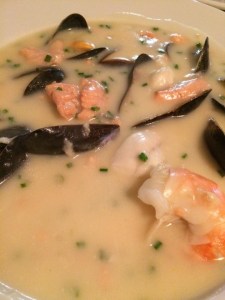
During 6 days in Ireland, we had several types of seafood chowder. It was served as a thin chowder and as a hearty thick chowder that made navigating with a spoon on the plate quite a challenge. The consistency of the soup changed with the location. The thickest and most memorable dishes we had during our trip were in Dingle, in a restaurant called Harrington’s, brimming with fresh prawns and smoked haddock, and in Dublin, in O’Neils Bar and Restaurant, where it simmered with mussels and a hint of Guinness for depth.
The chowder is not the most complicated soup to prepare. You have to make sure there are potatoes, milk, cream, spices, shrimps or clams or any type of seafood with the most delicious Atlantic fish, including a mix of salmon, haddock, and white fish. Milk and cream act as thickeners for the soup. To complement it, you should bake a bread and take out Irish butter and beer from the fridge—perhaps a crisp Guinness or creamy stout. Once the soup, bread, butter, and beer are on the table, you will have a taste of Ireland in your own home, evoking the salty breezes of the Wild Atlantic Way and the warmth of a fireside session.
 kasiasteps