Every spring, Istanbul transforms into a living painting. The air over the city is filled with the scent of blooming flowers. The city’s streets, parks, and public spaces become awash with the brilliant colours of tulips – lale as they’re affectionately known in Turkish. These flowers, with their graceful form and dazzling hues, are more than just seasonal decorations. They are steeped in centuries of symbolism, history, and artistry. As petals bloom under the spring sun, they whisper stories of sultans, poets, secret gardens, and diplomatic exchanges. I remember arriving at Atatürk Airport and during the taxi ride home my head would be squeezed in-between the window and the frame on the back seat, and I would be mesmerised by the colours and the number of tulips on the side of the streets.
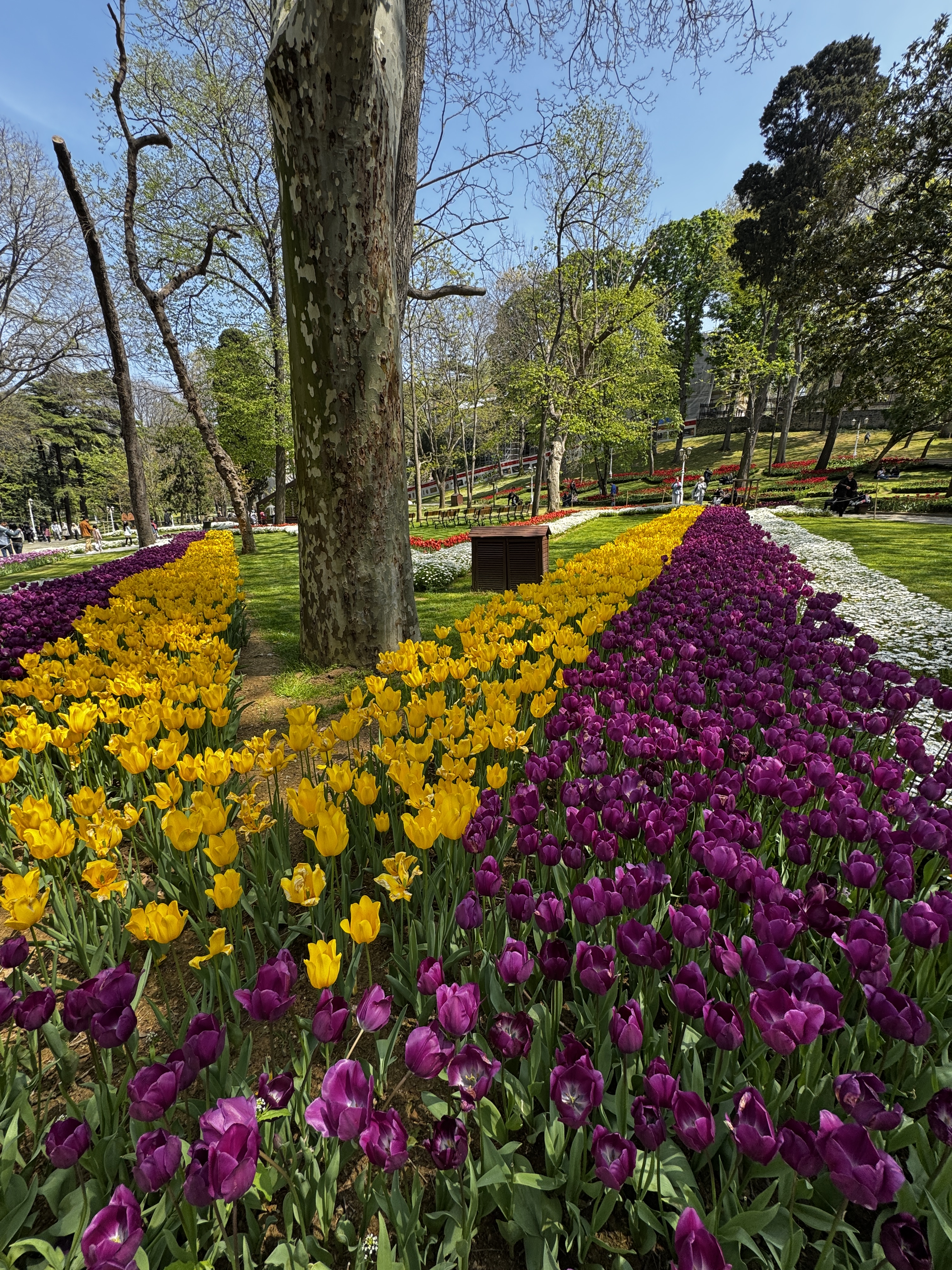
What makes tulips so special in Istanbul is not only their sheer beauty but also their timeless connection to the city and its identity. Unlike in many places where flowers are simply part of the landscape, locals have always considered tulips a cultural emblem. They reflect a rich history that links nature with spirituality, aesthetics with power, and history with the present moment. Whether you stumble upon a tulip garden in Emirgan Park or catch a glimpse of floral beds at Sultanahmet or Dolmabahçe Palace, you are not only part of the blooming wonders, but also witnessing something deeply rooted in the soul of Istanbul.
The tulip’s tale begins in the wind-swept landscapes of Central Asia. Long before it graced the manicured gardens of Europe or the grand courts of the Ottomans, the tulip grew wild in the mountain valleys of the Tien Shan and Pamir regions. Nomadic Turkic tribes, deeply connected to the rhythms of nature, admired the flower for its fleeting beauty and mysterious allure. As these tribes migrated westward, they carried with them not only their language and customs but also the tulip bulbs.
When the Seljuks and later the Ottomans established themselves in Anatolia, the tulip found fertile ground here. Both literally and culturally. The Ottomans embraced the flower with fervour, and by the 16th century, it became an integral part of the imperial garden aesthetic. Botanists, artists, and poets alike were inspired by its form. In Islamic art, which avoids the depiction of sentient beings, the tulip became a perfect subject; its symmetry, grace, and upright posture were seen as metaphors for spirituality and divine love.

The name “tulip” itself has intriguing origins. European traders and botanists are believed to have derived the word from the Persian word dulband, that simply means turban, which the flower was thought to resemble. By the mid-1500s, tulips had started their journey westward, carried in part by diplomats and traders, such as the famed Ogier Ghiselin de Busbecq (he was a 16th-century Flemish writer, herbalist and diplomat who served as ambassador to the Ottoman Empire in Constantinople). He admired the flower’s unique beauty and decided to send several bulbs to his homeland.
Interestingly only few realise that the Ottomans not only introduced the flower to Europe via informal channels but also sent tulip bulbs as diplomatic gifts. One such gift was made to the King of Holland in 1500s. It was a gesture of goodwill and symbolised not only the beauty of the flower but also the culture of the Ottoman court. This sparked what would become a tulip fever across Europe – most famously in the Netherlands.
The Dutch embraced the tulip with unrelenting enthusiasm. By the 17th century, a speculative frenzy known as “Tulip Mania” gripped the country. At the height of this economic bubble, a single tulip bulb could be worth more than a house. Though the bubble eventually burst, the tulip had firmly embedded itself in Dutch identity and horticultural tradition. Today, the Netherlands is one of the largest producers and exporters of tulips in the world.
But long before the flower captured European imaginations, it had already become a staple in Ottoman culture, textiles, ceramics, architectural tiles, and even weaponry with its elegant silhouette.
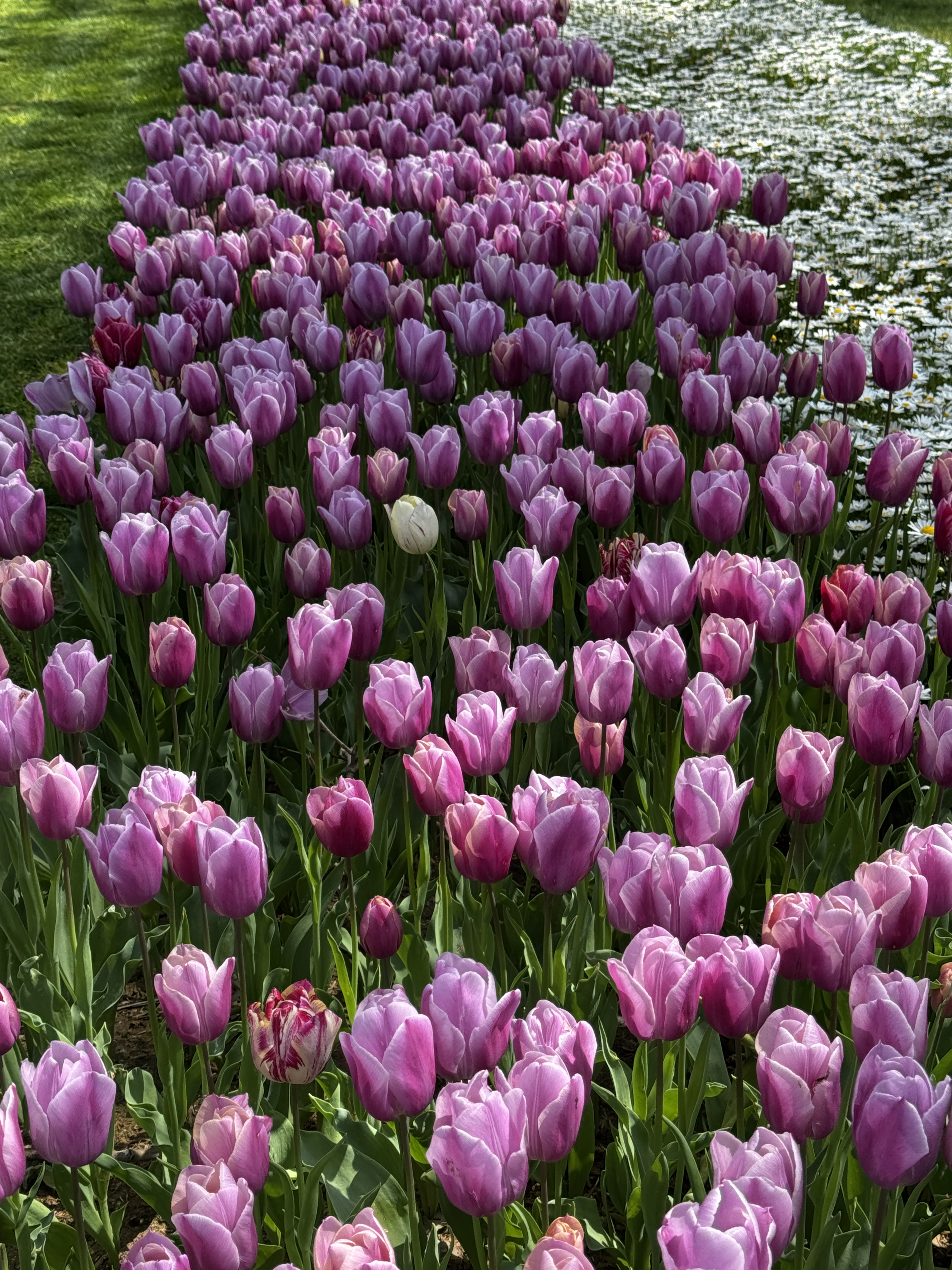
Few periods in Ottoman history are as enchanting as the Lâle Devri (eng. the Tulip Era) which unfolded between 1718 and 1730 under Sultan Ahmed III and his Grand Vizier, Nevşehirli Damat İbrahim Pasha. It was a time of relative peace after years of warfare, allowing the elite to turn their attention toward the arts, architecture and leisure. During this golden age, the tulip emerged as the ultimate symbol of refinement and sophistication.
The passion for tulips during this time was unlike anything before. Members of the court competed to breed rare and exquisite varieties, with some bulbs fetching prices equivalent to a fortune. Tulip gardens became theatres of elegance, where elaborate lantern-lit parties were held in spring evenings, poetry was recited, and fountains played their music. The sultans’ palaces were surrounded by fields of tulips that changed hue with the sunset—scarlet, golden, deep indigo, and snow-white.
But the Lâle Devri was also a mirror of societal tension. While the upper classes revelled in extravagance, many ordinary citizens suffered under heavy taxation and inflation. The luxurious indulgences of the elite, symbolised most vividly by tulips, eventually triggered unrest. In 1730, the Patrona Halil Revolt erupted, overthrowing the Tulip Era and plunging the empire back into political instability. Yet the cultural legacy of the era remained vivid, preserved in miniatures, chronicles, and, most importantly, the tulip’s enduring place in Turkish culture.
Fast forward to the 21st century, and tulips have returned to Istanbul in triumphant splendour. In 2005, the city launched the Istanbul Tulip Festival (Lale Festivali) one can say as a way to reconnect with its floral heritage. Every April, the city becomes a sea of colour with over 30 million tulips blooming across parks, avenues, and historical sites. Bear in mind that there are not just any random flowers. They are meticulously planned installations, designed to create specific shapes, intricate patterns, and floral mosaics.

Among the many places to see tulips in the city, Emirgan Park is most probably the most iconic place. Spread over 117 acres, this park near the Bosphorus is a showcase of botanical artistry. During the festival, walking through Emirgan feels like entering a fairy tale in a way —curved walkways framed by cascading tulips, flower beds shaped like Ottoman motifs, and views of the water sparkling through the trees. It is also home to the Tulip Museum, which shows the history and cultivation of this bloom.
But Emirgan is just the beginning. Gülhane Park, once part of the Topkapı Palace complex, offers an extraordinary mix of natural beauty and historical depth. It was a favourite spot for sultans to stroll, and nowadays during Lale Festivali, its sloping lawns become carpeted with tulips. Farther is Yıldız Park, tucked between Beşiktaş and Ortaköy and offers another dazzling tulip spectacle among Ottoman pavilions and wooded hills.
The displays extend beyond the parks: Sultanahmet Square, Taksim, and the Golden Horn shoreline are all part of the festival canvas. Even metro stations and traffic islands are dressed in tulips. In April laleler (eng. tulips) are present on every corner. Sometimes it feels like tulips are being “squeezed” into even the smallest green area in the city.
The city also hosts concerts, exhibitions, and traditional arts workshops in conjunction with the festival. For locals, it’s a time of joy and family outings; for visitors, a rare opportunity to see Istanbul reimagined as a floral city of dreams. Whether you’re sipping tea in Emirgan or gazing at the tulip beds before the Blue Mosque, you’re experiencing the blossoming of history and hope.
In Turkish culture, the tulip continues to hold profound symbolic weight. Its name in Arabic script has made it a spiritual symbol in Islamic art. Ottoman calligraphers often shaped the word into tulip-like forms, turning script into a floral admiration. Even today, you can find stylised tulips on mosque walls, on tiles in the Grand Bazaar, or gracing the borders of manuscripts.

The flower also appears in everyday life in subtler ways. It’s the national flower of Turkey. It’s part of the official branding of Turkish Airlines. Next time you fly with Turkey’s national carrier, please have a look at the plane and spot lale stretched across its body. It adorns souvenir ceramics, scarves, and postcards, serving as a quiet but consistent emblem of Istanbul’s beauty and historical depth.
One of the most charming everyday tributes to the tulip is the traditional Turkish çay glass, shaped like the flower itself. Known as ince belli, or “slim-waisted,” this iconic tea glass mimics the curves of a tulip bud—narrow in the middle, gently flaring at the rim. The shape is both elegant and practical: it keeps the tea hot longer at the base while allowing the top to cool just enough to drink. The glass, always transparent, proudly displays the rich hue of Turkish black tea. Tulips live not only in the gardens during the month of April, but in every sip of tea shared with a friend.
I am sure there are homes across the globe with traditionally painted tiles hanging on walls, thousands of sofas decorated with tulip pillow covers bought in Turkish bazaars. Not to mention several millions of Turkish çay glasses are being flown by planes every day. I have at least 40 of them at home…
 kasiasteps